
Zombie Party emerges as a thrilling underwater shooting experience where horror aesthetics meet precision gameplay, delivering an intense arcade-style environment tailored for players who enjoy calculated risk and structured reward systems. Available through CK33, a Bangladesh-facing bookmaker platform, the game blends strategic targeting, weapon upgrades, and payout mechanics into a cohesive system that rewards both accuracy and timing. This article dives deeply into mechanics, rules, and reward structures to help players maximize efficiency and understand the ecosystem.
Core Gameplay Mechanics of Zombie Party

At its foundation, Zombie Party is a fish shooting game with a dark twist. Instead of colorful marine life, players encounter mutated sea creatures, undead bosses, and dynamic wave patterns. The objective remains straightforward: shoot targets to earn points, which convert into monetary rewards. However, the depth lies in how damage, multipliers, and ammo cost interact.
Each shot consumes credits, and each target has a defined health value. Larger or boss-type enemies yield higher rewards but require sustained firepower. The system introduces a risk-reward curve where inefficient shooting leads to losses, while precision yields exponential returns. The game operates on real-time RNG mechanics, ensuring fairness while maintaining unpredictability.
Players must constantly balance ammo expenditure with expected returns. For example, a mid-tier zombie fish might require 20–30 shots at 2 BDT per shot, totaling 40–60 BDT investment, while yielding a payout of 120–180 BDT depending on multiplier conditions. This creates a margin that skilled players can exploit. Weapon selection is another critical layer. Different cannons offer varying firing speeds, damage outputs, and spread patterns. Upgrading weapons increases cost per shot but significantly boosts efficiency against high-value targets.
Rules and Reward Systems in Zombie Party

Understanding the rules of Zombie Party is essential to building a consistent winning approach. The game follows a structured payout system where each entity has a predefined multiplier tied to its difficulty level.
Basic Rules Overview
Before diving into strategy, players must internalize the rule set that governs every round:
- Each player starts with a credit balance, typically denominated in BDT
- Shots deduct credits instantly upon firing
- Targets have hidden HP values that determine how much damage is required
- Rewards are distributed instantly upon eliminating a target
- Bosses appear periodically and offer high multipliers but require coordinated attacks
The system is not purely luck-based. Timing, positioning, and target prioritization significantly influence outcomes.
Reward Multipliers and Payout Table
Below is a structured breakdown of common target types and their reward ranges:
| Target Type | HP Range | Multiplier Range | Avg Cost to Kill (BDT) | Avg Reward (BDT) |
| Small Zombie Fish | 5–10 | 2x – 5x | 10–20 | 20–80 |
| Medium Mutants | 15–25 | 6x – 15x | 40–70 | 120–400 |
| Large Undead Beasts | 30–50 | 20x – 50x | 100–200 | 500–2000 |
| Mini Boss | 60–100 | 60x – 120x | 300–600 | 3000–8000 |
| Ultimate Boss | 150+ | 150x – 300x | 800–1500 | 15000–45000 |
The table highlights a key principle: efficiency increases dramatically when targeting mid-to-high tier enemies with controlled bursts rather than continuous firing.
Special Bonus Features
To enhance engagement, Zombie Party integrates bonus mechanics that temporarily alter gameplay:
- Frenzy Mode increases fire rate and damage output for 10–15 seconds
- Freeze Skill locks enemy movement, making targeting easier
- Chain Lightning allows shots to hit multiple enemies simultaneously
- Jackpot Trigger activates randomly during boss fights
These features can drastically shift outcomes if used strategically. For instance, activating Frenzy Mode during a boss encounter can reduce total ammo expenditure by up to 30 percent. CK33 integrates these reward systems seamlessly into its platform, ensuring smooth credit conversion and transparent tracking of winnings.
Advanced Strategy and Optimization in Zombie Party
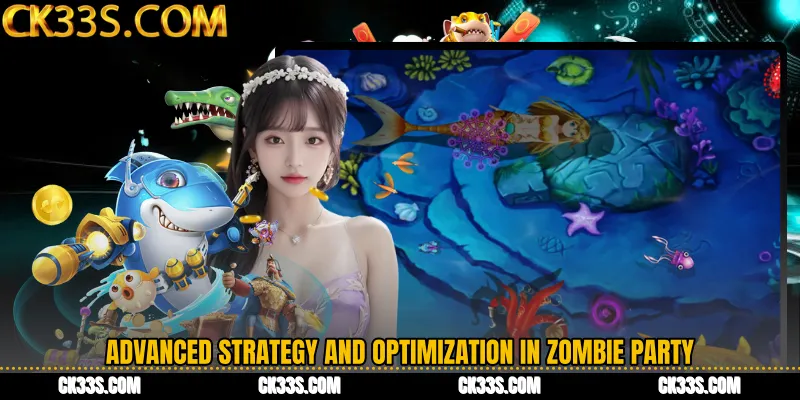
To move beyond casual play, players must adopt a structured strategy that accounts for probability, timing, and resource allocation. Zombie Party rewards disciplined gameplay rather than random shooting.
Target Prioritization Strategy
Between waves of enemies, choosing the right targets is crucial. A short guiding principle can help players decide quickly.
Priority Order for Maximum Efficiency
- Focus on medium-tier targets first for consistent returns
- Avoid overcommitting to high HP bosses without bonus activation
- Eliminate clustered enemies using spread weapons
- Switch targets if damage output exceeds expected reward
This layered approach reduces unnecessary credit loss and improves long-term profitability.
Weapon Optimization and Cost Control
Weapon upgrades are not always beneficial if misused. Players must align weapon type with target category.
| Weapon Type | Cost per Shot (BDT) | Best Use Case | Efficiency Rating |
| Basic Cannon | 1–2 | Small fish farming | Medium |
| Rapid Blaster | 3–5 | Medium enemies | High |
| Heavy Cannon | 6–10 | Boss fights | Very High |
| Electric Gun | 8–12 | Cluster attacks | High |
Switching weapons dynamically based on enemy type is a core skill. Using a heavy cannon on small fish results in overkill and wasted credits.
Managing Bankroll and Session Duration
Recommended Session Structure
- Start with low-cost weapons to build initial balance
- Transition to mid-tier targets once balance increases
- Reserve high-cost attacks for bonus phases or boss spawns
- Set a stop-loss limit at 20–30 percent of starting balance
- Exit session after achieving 50–100 percent profit
This structured approach minimizes emotional decisions and promotes consistent gains.
Probability Awareness and RNG Behavior
Although Zombie Party operates on RNG, patterns emerge in spawn rates and reward distribution. Players often notice:
- Boss appearances occur every 3–5 minutes
- Bonus features trigger more frequently after sustained play
- High-value targets cluster during mid-session phases
Recognizing these patterns allows players to conserve resources and strike at optimal moments. CK33 provides a stable interface where these mechanics function without latency, which is critical for timing-based gameplay.
Bonus Timing and Multiplier Maximization
Timing bonuses is one of the most advanced skills in Zombie Party. Activating a bonus too early or too late reduces its effectiveness. For example, using Freeze Skill when only small enemies are present yields minimal benefit. Instead, players should wait until:
- Multiple medium or large targets appear simultaneously
- A boss is within low HP range
- Ammo reserves are sufficient to capitalize on the bonus window
This timing can increase total session profit by 25–40 percent when executed correctly. CK33 enhances this experience by ensuring that bonus triggers are clearly indicated, allowing players to react instantly.
Final Thoughts
Zombie Party stands out as a highly structured shooting game where success depends on more than reflexes. By understanding the rules, optimizing weapon use, and leveraging bonus mechanics, players can transform a simple arcade concept into a calculated earning system. The combination of strategic depth and reward transparency makes it appealing for both beginners and experienced players. Join CK33 today to experience Zombie Party firsthand and apply these insights in a real gameplay environment.